
FOR IMMEDIATE RELEASE: June 2, 2009
CONTACT: Jon Rodney, 510-207-9520
Port of Oakland Votes on Truck Pollution Measures Despite Industry Lawsuit – A Statement by Doug Bloch, Director of the Oakland Coalition for Clean & Safe Ports, on behalf of the entire Coalition Steering Committee
“The Port of Oakland is taking steps today to address the broken port trucking system, despite industry litigation against the Ports of LA and Long Beach to block clean up efforts. From day one, the American Trucking Association has made it clear that they are all for clean air, as long as they don’t have to pay for it.
“We all recognize that the industry opposition has temporarily tied the hands of the Port to a great degree. Within the current legal environment, the Port cannot pass a Comprehensive Truck Management Plan (CTMP) that is truly ‘comprehensive’ or meets all of the original goals. But even with the legal constraints, the Port is moving in the right direction with the CTMP – although there is a long way to go.
“First, the Port recognizes it needs to have a direct relationship with the trucking companies that operate on their property and a mechanism to hold them accountable. They aim to do this through the creation and administration of a Truck Registry.
“Second, last Tuesday the Port’s Maritime Committee proposed to include a truck ban in the CTMP, similar in style to LA and Long Beach. In a nutshell, a Port-enacted truck ban will require the Marine Terminal Operators to turn dirty trucks away from gates after January 1, 2010 – something that that the State does not have the authority to do. We applaud the truck ban and urge the Commissioners to include un-retrofitted 1994 - 2003 trucks in the ban so that by January 1, 2010 every truck serving the Port meets the State’s clean air standards. If the Port passes the CTMP with an amended truck ban, we can say to any Oakland resident or Port worker that we will get an immediate reduction in diesel emissions on January 1st because of actions that the Port took.
“This is exactly the type of leadership we’ve been crying out for, and we can thank Commissioners Margaret Gordon and Victor Uno for it. Port Director Omar Benjamin testified in Sacramento last week that the Port intends to move forward on the truck ban, and we hope that it passes at the full Board today.
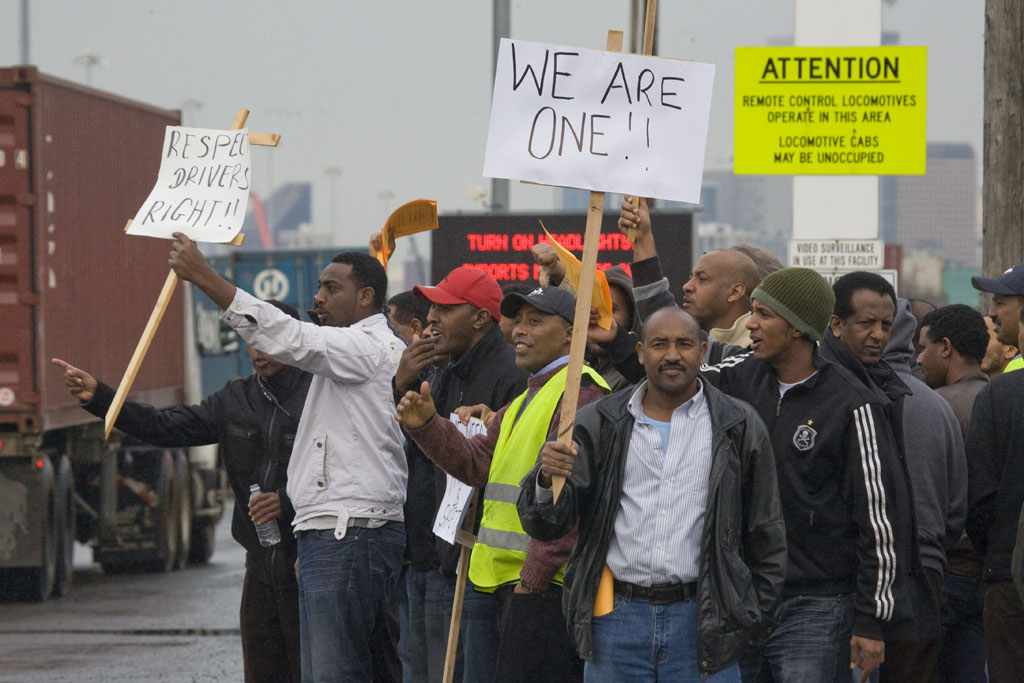
“We believe a truck ban is one of best solutions the Port can take to reduce pollution from trucks within the current legal environment. However, there is a lot more that can be done in the CTMP, especially efforts to help the truck drivers who cannot afford to retrofit or replace their trucks. We do not want to add hundreds of people to the army of the unemployed on January 1st. Truck drivers need more information about what is happening, financial assistance to upgrade or purchase new trucks, and job training for those who will be displaced. The Port and other stakeholders must make this available.
“Last Tuesday the Port also sent a strong signal that they are not satisfied with the status quo and that they intend to do more than the current CTMP. One only needs to look at the resolution introduced by Commission President Victor Uno, which calls on the Port to adopt the Beacon Study and its recommendations. If adopted next Tuesday, the Port of Oakland will go on record stating that the employee driver model ‘presents the most benefits in the areas of accountability, sustainability, and efficiency.
“It is regrettable that the industry opposition and the laws prevent the Port from moving forward on the recommendation to implement an employee concession model.
“Clearly the laws governing trucking that were passed 30 years ago are outdated and don’t reflect our current needs. If the Courts say that the Ports cannot take bold action to address the environmental and public health impacts of Port trucking – that the ability of trucking companies to make money unimpeded supersedes that – then the laws need to be updated. The interests of the few cannot outweigh the interests of the many.
“The good news is that litigation from the trucking industry is inviting closer scrutiny of deregulation’s impact on port communities. In a recent letter, Bay Area Members of Congress voiced support for our proposal to ensure ‘greater accountability, efficiency, and sustainability’ for the Port trucking system.
“It is important that the Port has the legal authority and the tools to hold the trucking industry accountable. We need clean air and good jobs and a sustainable and economically vibrant Port that lifts up the region. Industry opposition and outdated laws cannot be allowed to prevent that.”