
The Campaign for Clean Air and Good Jobs at the Ports of New York & New Jersey
Resources & Information
Driven by a broken economic system, port truck drivers in New York and New Jersey are robbed of basic protections afforded other types of workers in the United States and paid as little as $10 or $11 an hour. Low-wage port truck drivers are forced to carry the entire cost of owning and maintaining their own trucks and are often only able to afford to oldest and dirtiest trucks available. As a result, communities located near ports or along major truck routes are saturated by toxic, deadly diesel pollution.
The Coalition for Healthy Ports is a bi-state alliance of environmental activists, truck drivers, faith leaders, labor unions and community advocates fighting for environmental and economic justice at the ports of New York and New Jersey. The Coalition for Healthy Ports is the East Coast arm of the Coalition for Clean & Safe Ports.
Posts From New York/New Jersey
ACTION ALERT: DEMAND A FULL REVIEW AND ENVIRONMENT IMPACT ASSESSMENT OF THE BAYONNE BRIDGE EXPANSION PROJECT
February 12, 2013
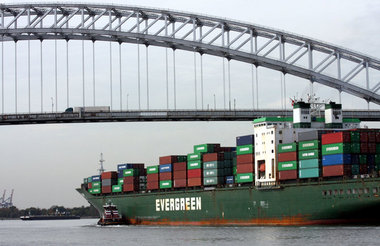 The Port Authority wants to modify the Bayonne Bridge to accommodate for more and bigger ships, but the Port Authority shouldn’t be able to expand until there is environmental justice for port communities and economic justice for port drivers.
Already, in the communities’ surrounding New Jersey’s Ports, 1 in 4 children suffer from asthma and the risk of cancer from diesel emissions is hundreds of times the acceptable level. The raising of the Bayonne Bridge threatens local residents and workers with an increase in diesel pollution.
Join our coalition in demanding that the U.S. Coast Guard conduct a full review and assessment of the environmental impacts that raising the Bayonne Bridge will have on the public health of workers and nearby residents.
Authorities must stop ignoring the environmental and public health impacts of a broken port system. Time to assess the problem and fix it.
Sign our petition.
Truck Drivers Clinch New Power with First Union Contract at L.A. Ports!
January 9, 2013
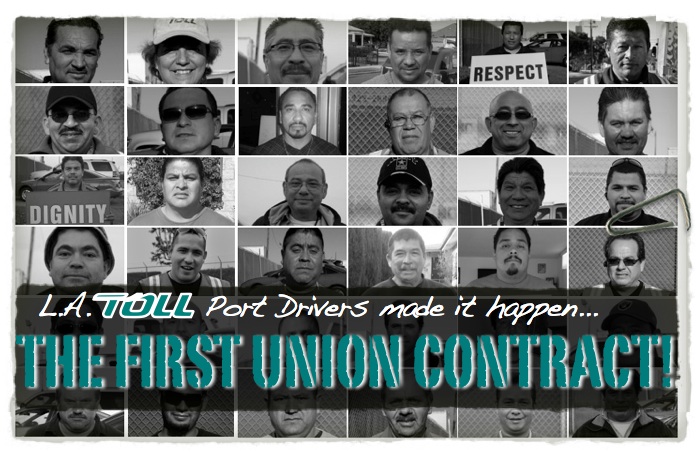 They did it again, and this time it paid off in a huge way. L.A’s Toll Group drivers, who made national and international headlines in April by overwhelmingly voting to become Teamsters, cemented their place in history by ratifying the first union contract in the drayage industry in 30 years. And boy is the contract a good one! The agreement is highly regarded as a standard-setting first union contract, and viewed as a huge win for any union and a definite game-changer for U.S. port drivers.
The drivers who haul apparel and merchandise shipped to our shores for America’s brand name stores will kick start 2013 with a contractual raise of more than $6 per hour along with paid overtime, sick leave and holidays, a far more affordable health care plan with zero change in coverage, guaranteed shift hours and other provisions to provide job security – plus a pension plan.
“Justice…it’s sort of an indescribable feeling, but it is overwhelming and incredible to finally have the American Dream at our reach,” said Jose Ortega Jr., a driver for global logistics giant Toll Group who served on the bargaining committee for his co-workers along with representatives from the International Brotherhood of Teamsters and Local 848 in Long Beach, Calif. The Australian corporation operates near the nation’s largest port complexes on both coasts and handles accounts for Guess?, Polo, Under Armour and other fashion and sportswear lines sold at big box and department retailers like Walmart and JC Penney.
The landmark agreement culminates more than 24 months of worker struggle and employer resistance in which these truckers – aided by a community coalition, their children, and clergy – borrowed bullhorns, leafleted consumers, gathered signatures practiced their picket lines, staged noisy protests, crashed shareholder meetings in a dogged campaign to end the Third World-like working conditions they once routinely endured.
U.S. port drivers are the most underpaid in the trucking industry: A typical professional earns $28,873 a year before taxes. Their net incomes often resemble that of part-time fast food or retail workers though they clock an average of 59 hours a week. They must possess specialized skills and licensing to safely command an 80,000 lb. container rig, but they fit the profile of America’s working poor. Food stamps, extended family, or church pantries are needed to get by; their children often lack regular pediatricians or only receive care at the public ER.
With American wages in freefall due to the imbalance of power enjoyed by multinational corporations, the scope and significance of such a labor accord with a transportation titan that operates in some 55 countries is alone a jaw dropper. What observers further find remarkable: The 65 workers who secured these middle-class benefits with their $8 billion employer are blue-collar Latino-Americans who hold jobs within a deregulated, virtually union-free industry at the ports.
“It upends the common wisdom that a workforce that lacks rights on the job cannot build the courage or bargaining strength to take on the Goliaths of the global economy. But these drivers, like the workers at the warehouses and Walmart and Wendy’s, understand they cannot raise families on such low wages, so they are coming together to rewrite the playbook,” noted Dr. John Logan, the director of Labor and Employment Studies at the College of Business at San Francisco State University. “The faces of this new movement are ordinary parents and churchgoers and community members who value the influence of a local priest as much as the expertise of an international overseas union. Not only do they have the guts to strike – they have the faith they can win.”
Their collective resolve paid off. Mr. Ortega, a single father who works the night shift, will see his new per-hour rate of $19.75 reflected on his next paycheck, plus any overtime will be paid at a time-and-a-half rate of $28.
“As a truck driver, I wanted the assurance that things would be okay for my daughter if I was injured, that I could take her to see the doctor if she got sick,” the 36-year-old explained. “When we started organizing ourselves, we weren’t asking for anything out of this world. To be treated with dignity. A fair day’s pay for a hard day’s work. Decent, sanitary facilities to make a pit stop, rest, eat…you know, perform our jobs safely.
“But we knew winning basic respect would take a fight at every turn. So when we were afraid to lose our jobs, we asked our allies for help. When we were afraid to take action, we prayed for the courage to speak out. And we always stuck together, and never ever gave up.”
Elected leaders praised the union contract as both a middle-class builder and noted its high-road business merits.
“We’re talking about the men and women who are the backbone of our regional and national economy, yet they have never shared in the prosperity of the corporations they make so profitable,” said Los Angeles Councilman Joe Buscaino, whose district includes the largest port in America. “The standards that Toll Group, its workers, and Teamsters Local 848 have set make it possible to reward and attract responsible port businesses that want to compete on a more level playing field based on innovation and quality, rather than who can pay Los Angeles’ vital workers the least.”
Fair wages –The day shift hourly rate increased from $12.72 to $19, and the night shift hourly rate from $13.22 to $19.75. In addition to the over $6/hour increase in hourly pay rates, drivers won $0.50/hour per year raises over the life of the contract, giving Toll port drivers over a 60% hourly wage boost over the life of the 3-year contract. Overtime pay of time-and-half kicks in after a typical full time 40-hour week, which is extremely rare in an industry where truckers are exempt from federal overtime laws and an average week hovers around 60 hours.
Secure retirement –Prior to the contract, less than a dozen Toll drivers could spare any extra dollars, even pre-tax, to participate in the corporate 401(k) plan. As Teamster Local 848 members, they have been automatically enrolled in the union’s Western Conference Pension Trust. Such a retirement plan at the port has rarely been seen since trucking was deregulated in 1980. Toll will make a pension contribution of $1/hour per driver until 2014, and a $1.50/hour per driver by 2015.
Affordable health care – The Toll Group health care plan was financially out of reach for most of its truck drivers. The few who managed to meet the premium, deductibles and copayments will now keep significant more money in their pocket without sacrificing coverage, and the rest of their co-workers finally have access to quality, affordable health insurance coverage, including dental and vision care. The company will pay 95% of the premium for individuals and 90% for family coverage. Drivers who previously had to shell out $125/month for individual or $400/month per family will drop to roughly $30 or $150, respectively.
Stable work hours and paid time off – Most truck drivers lose a day’s pay if they cannot work, are penalized by dispatchers for being unable to haul a load, and lack paid sick or holiday leave, making it stressful for family budgets and planning. But Toll drivers made substantial gains in all these areas. They will receive seven paid holidays, three paid personal days, and six paid sick days annually. They will accrue one or two weeks of vacation within the first two years of service, with longtime employees earning up to a month. They can also bank on guaranteed full- or half-day of pay regardless of seasonal slowdowns if they are scheduled to work.
Incentives to grow responsibly, level competition, and raise market standards – The agreement establishes a high-road business model for the port trucking industry that recognizes Toll’s competitors have not yet embraced livable wages and working conditions. To encourage a more level playing field and wide-scale unionization, drivers will have the ability to re-negotiate for improvements when a simple majority of the Southern California market is organized.
“We commend the drivers at Toll for their leadership in challenging the status quo at the ports. Workers everywhere are standing up and saying enough to poverty wages and Toll drivers have demonstrated that working families are ready to bring middle-class wages back to America,” said Teamster General President Jim Hoffa.
“For too long companies in the global supply chain have gamed the system by undercutting U.S. businesses that actually create good jobs. Toll Group and its drivers have raised the bar for responsible competition, and the Teamsters will not stop until the rest of the nation’s port drivers have a shot at the American Dream.”
Drivers from coast to coast in the virtually non-union and deregulated sector are eyeing the pact as a huge leap forward for the profession with the potential to trigger sweeping changes in the industry. Click here to see an infographic on how the L.A. Toll Teamsters stack up against the rest of the industry.
An Open Letter from America’s Port Truck Drivers on Occupy the Ports
December 12, 2011
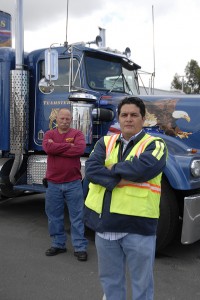
We are the front-line workers who haul container rigs full of imported and exported goods to and from the docks and warehouses every day.
We have been elected by committees of our co-workers at the Ports of Los Angeles, Long Beach, Oakland, Seattle, Tacoma, New York and New Jersey to tell our collective story. We have accepted the honor to speak up for our brothers and sisters about our working conditions despite the risk of retaliation we face. One of us is a mother, the rest of us fathers. Between the five of us we have 11children and one more baby on the way. We have a combined 46 years of experience driving cargo from our shores for America’s stores.
We are inspired that a non-violent democratic movement that insists on basic economic fairness is capturing the hearts and minds of so many working people. Thank you “99 Percenters” for hearing our call for justice. We are humbled and overwhelmed by recent attention. Normally we are invisible.
Today’s demonstrations will impact us. While we cannot officially speak for every worker who shares our occupation, we can use this opportunity to reveal what it’s like to walk a day in our shoes for the 110,000 of us in America whose job it is to be a port truck driver. It may be tempting for media to ask questions about whether we support a shutdown, but there are no easy answers. Instead, we ask you, are you willing to listen and learn why a one-word response is impossible?
We love being behind the wheel. We are proud of the work we do to keep America’s economy moving. But we feel humiliated when we receive paychecks that suggest we work part time at a fast-food counter. Especially when we work an average of 60 or more hours a week, away from our families.
There is so much at stake in our industry. It is one of the nation’s most dangerous occupations. We don’t think truck driving should be a dead-end road in America. It should be a good job with a middle-class paycheck like it used to be decades ago.
We desperately want to drive clean and safe vehicles. Rigs that do not fill our lungs with deadly toxins, or dirty the air in the communities we haul in.
Poverty and pollution are like a plague at the ports. Our economic conditions are what led to the environmental crisis.
You, the public, have paid a severe price along with us.
Why? Just like Wall Street doesn’t have to abide by rules, our industry isn’t bound to regulation. So the market is run by con artists. The companies we work for call us independent contractors, as if we were our own bosses, but they boss us around. We receive Third World wages and drive sweatshops on wheels. We cannot negotiate our rates. (Usually we are not allowed to even see them.) We are paid by the load, not by the hour. So when we sit in those long lines at the terminals, or if we are stuck in traffic, we become volunteers who basically donate our time to the trucking and shipping companies. That’s the nice way to put it. We have all heard the words “modern-day slaves” at the lunch stops.
There are no restrooms for drivers. We keep empty bottles in our cabs. Plastic bags too. We feel like dogs. An Oakland driver was recently banned from the terminal because he was spied relieving himself behind a container. Neither the port, nor the terminal operators or anyone in the industry thinks it is their responsibility to provide humane and hygienic facilities for us. It is absolutely horrible for drivers who are women, who risk infection when they try to hold it until they can find a place to go.
The companies demand we cut corners to compete. It makes our roads less safe. When we try to blow the whistle about skipped inspections, faulty equipment, or falsified logs, then we are “starved out.” That means we are either fired outright, or more likely, we never get dispatched to haul a load again.
It may be difficult to comprehend the complex issues and nature of our employment. For us too. When businesses disguise workers like us as contractors, the Department of Labor calls it misclassification. We call it illegal. Those who profit from global trade and goods movement are getting away with it because everyone is doing it. One journalist took the time to talk to us this week and she explains it very well to outsiders. We hope you will read the enclosed article “How Goldman Sachs and Other Companies Exploit Port Truck Drivers.”
But the short answer to the question: Why are companies like SSA Marine, the Seattle-based global terminal operator that runs one of the West Coast’s major trucking carriers, Shippers’ Transport Express, doing this? Why would mega-rich Maersk, a huge Danish shipping and trucking conglomerate that wants to drill for more oil with Exxon Mobil in the Gulf Coast conduct business this way too?
To cheat on taxes, drive down business costs, and deny us the right to belong to a union, that’s why.
The typical arrangement works like this: Everything comes out of our pockets or is deducted from our paychecks. The truck or lease, fuel, insurance, registration, you name it. Our employers do not have to pay the costs of meeting emissions-compliant regulations; that is our financial burden to bear. Clean trucks cost about four to five times more than what we take home in a year. A few of us haul our company’s trucks for a tiny fraction of what the shippers pay per load instead of an hourly wage. They still call us independent owner-operators and give us a 1099 rather than a W-2.
We have never recovered from losing our basic rights as employees in America. Every year it literally goes from bad to worse to the unimaginable. We were ground zero for the government’s first major experiment into letting big business call the shots. Since it worked so well for the CEOs in transportation, why not the mortgage and banking industry too?
Even the few of us who are hired as legitimate employees are routinely denied our legal rights under this system. Just ask our co-workers who haul clothing brands like Guess?, Under Armour, and Ralph Lauren’s Polo. The carrier they work for in Los Angeles is called Toll Group and is headquartered in Australia. At the busiest time of the holiday shopping season, 26 drivers were axed after wearing Teamster T-shirts to work. They were protesting the lack of access to clean, indoor restrooms with running water. The company hired an anti-union consultant to intimidate the drivers. Down Under, the same company bargains with 12,000 of our counterparts in good faith.
Despite our great hardships, many of us cannot — or refuse to, as some of the most well-intentioned suggest — “just quit.” First, we want to work and do not have a safety net. Many of us are tied to one-sided leases. But more importantly, why should we have to leave? Truck driving is what we do, and we do it well.
We are the skilled, specially-licensed professionals who guarantee that Target, Best Buy, and Wal-Mart are all stocked with just-in-time delivery for consumers. Take a look at all the stuff in your house. The things you see advertised on TV. Chances are a port truck driver brought that special holiday gift to the store you bought it.
We would rather stick together and transform our industry from within. We deserve to be fairly rewarded and valued. That is why we have united to stage convoys, park our trucks, marched on the boss, and even shut down these ports.
It’s like our hero Dutch Prior, a Shipper’s/SSA Marine driver, told CBS Early Morning this month: “If you don’t stand for something, you’ll fall for anything.”
The more underwater we are, the more our restlessness grows. We are being thoughtful about how best to organize ourselves and do what is needed to win dignity, respect, and justice.
Nowadays greedy corporations are treated as “people” while the politicians they bankroll cast union members who try to improve their workplaces as “thugs.”
But we believe in the power and potential behind a truly united 99%. We admire the strength and perseverance of the longshoremen. We are fighting like mad to overcome our exploitation, so please, stick by us long after December 12. Our friends in the Coalition for Clean & Safe Ports created a pledge you can sign to support us here.
We drivers have a saying, “We may not have a union yet, but no one can stop us from acting like one.”
The brothers and sisters of the Teamsters have our backs. They help us make our voices heard. But we need your help too so we can achieve the day where we raise our fists and together declare: “No one could stop us from forming a union.”
Thank you.
In solidarity,
Leonardo Mejia
SSA Marine/Shippers Transport Express
Port of Long Beach
10-year driver
Yemane Berhane
Ports of Seattle & Tacoma
6-year port driver
Xiomara Perez
Toll Group
Port of Los Angeles
8-year driver
Abdul Khan
Port of Oakland
7-year port driver
Ramiro Gotay
Ports of New York & New Jersey
15-year port driver
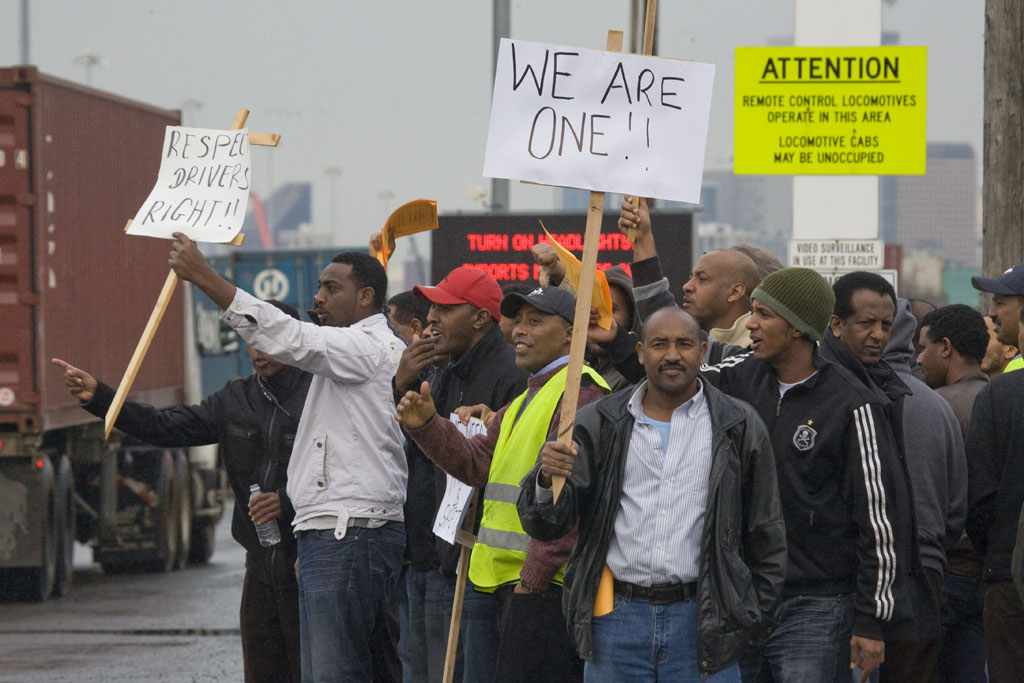
New Jersey Port Truck Drivers Protest Worker Intimidation & Wage Theft
December 9, 2011
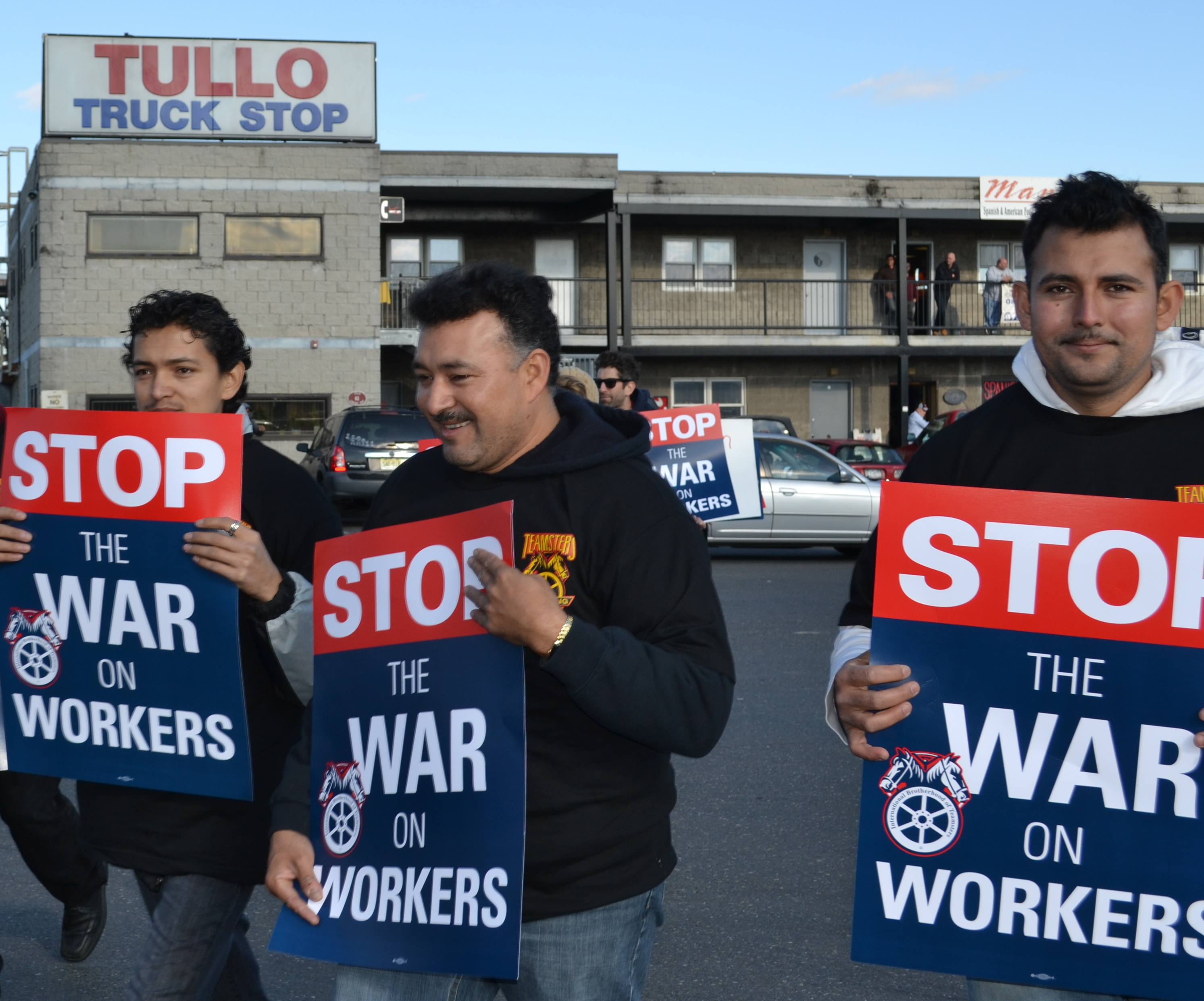
On the first business day following a meeting truck drivers had with a lawyer to file a wage theft lawsuit against Proud 2 Haul, Ivana Koprowski, the owner, terminated two of the drivers who attended the meeting. Felix Jay and Gonzalo Chirino claim that they were told their terminations were for “working against the company and not with the company.”
In response, truck drivers filed charges with the labor board and organized a rally at the Tullo Truck Stop in Kearny, NJ in support of the two terminated drivers.
Flanked by community leaders and Teamsters, Felix and Gonzalo marched into Proud 2 Haul’s offices to demand that they be reinstated, with back pay and full employee rights for all drivers at the company.
“I’ve been hauling containers for three decades at these ports and over the years conditions for truck drivers have only worse,” said Felix Jay a married father of five and one of the drivers who was terminated. “Low-road companies like Proud 2 Haul and ruthless owners like Ivana Koprowski have made it impossible for port truck drivers to earn a living. They never miss an opportunity to deduct money from our paychecks or to deny us basic employee rights.”
A number of elected leaders and community, environmental and faith leaders have also lent their support to the truck drivers at Proud 2 Haul and made phone calls to the company expressing their concern.
“It’s an outrage that these workers – or any workers for that matter – become the targets of retaliation and harassment for simply exercising their right collective action,” said Assemblywoman Annette Quijano. “I’m also deeply concerned about the allegations of wage theft and worker misclassification, something the trucking industry has brushed off as ‘a long accepted practice’. I believe these practices are highly controversial and morally unconscionable.”
“Our ports are an economic engine that should generate good, quality jobs for New Jersey,” said Congressman Albio Siris. “This appears to be an example of employment practices that are used in port trucking and illustrates that we must review and reform this industry.”
“What’s happening at Proud 2 Haul is endemic of how the port trucking industry operates,” said Amy Goldsmith, chair of the Coalition for Healthy Ports and the statewide director of the New Jersey Environmental Federation. “By calling truck drivers ‘independent contractors’ instead of ‘employees’ trucking companies have stripped drivers of their rights, and evaded any responsibility for the diesel pollution and environmental health injustices the industry has imposed on port communities.”
Earlier this year truck drivers at Ironbound Express in Newark made similar wage theft allegations. Ramiro Gotay, a truck driver at Ironbound Express claims that the company deducted 6 percent of his weekly earnings, or just over $20,000 over five years working at the company. “That is money that was stolen from my daughter’s future, for her college education. The trucking companies operate as if they have a license to abuse truck drivers, but we’re saying ‘enough is enough.’”
The terminations at Proud 2 Haul are one example of a growing trend by port truck companies to silence truck drivers that are organizing to improve their working conditions in the run up to the busy holiday season. At the ports of Los Angeles and Long Beach 26 truck drivers were abruptly axed under the guise of “lay-offs” from the Toll Group – a company that hauls apparel for major retailers like Polo and Guess – after truck drivers demanded clean, permanent restroom facilities instead of the dirty outhouses the company offered them.
In a CBS Early News report, Robert Digges, a spokesman for the trucking industry tripped on his own tongue when he tried protesting the idea that trucking companies routinely cheat truck drivers. “They (trucking companies) believe they get a more productive employee – excuse me a more effective worker – a worker who is efficient, who has some skin in the game.”
Trucking industry exposed for “ripping off” workers and taxpayers; Department of Labor vows crackdown
December 2, 2011
What is the trucking industry response to claims that port drivers are actually employees who have been stripped of their basic rights by trucking companies? Robert Digges, a spokesman for the American Trucking Associations, tripped on his own tongue on a CBS national news segment when he tried protesting the idea that trucking companies are cheating workers – and it’s getting picked up on blogs like the Daily Kos.
“They (trucking companies) believe they get a more productive employee - excuse me a more effective worker - a worker who is efficient, who has some skin in the game.”
So, the industry that dismantled the Los Angeles Clean Truck Program finally lets the truth slip: port truck drivers are actually employees who have had their rights stripped from them by greedy port trucking companies seeking to pad their bottom line.
“As long as we are independent contractors (the company) doesn’t have to cover benefits, they don’t have to cover sick days, bereavement leave time, holiday pay. It just saves the company money,” said Dutch Prior, a port driver for Shippers Transport in Oakland.
While the scheme is a boon for port trucking companies like Shippers Transport, a subsidiary of the giant SSA Marine (half-owned by Goldman Sachs), it’s drawing the attention of the Occupy movement and the Department of Labor.
“These (practices) have astronomical impacts on local governments, state governments and federal government and also hurts good, legitimate businesses that are playing by the rules and for employees that are being ripped off,” said Hilda Solis, the head of the US Department of Labor.
Last year the agency collected more than $5 million for nearly 8,000 misclassified workers, but with 300 new investigators on staff the Department of Labor will be looking more closely at misclassification schemes.
On December 12th the Occupy movement is organizing a shutdown of the West Coast ports while the Occupy protesters in New York take their case directly to Goldman Sachs on the same day (Goldman Sachs – half-owner of SSA Marine – has its own checkered history with paying taxes. It’s easy to understand why the Occupy folks are targeting the company in the coordination with the port shut down.)
The CBS Early Show segment is only the latest in a series of investigative news pieces on the port trucking industry generally and on Shippers Transport in particular.
Salon.com interviewed Leonardo Mejia, a truck driver for Shippers Transport who works out of Long Beach. “Mejia is part of the shadow economy, though not in the sense that that term is commonly understood: as an autonomous netherworld entirely off the books and underground, invisible to the taxman and mainstream society. Mejia’s shadow economy is something a little different; purposefully created from the top down, its growth driven by employers increasingly eager to shed costly, legally mandated commitments to their employees.”
New laws will help port truck drivers and other employees who are purposely misclassified by their employers, but enforcement of new and existing laws is key. Without strict enforcement from government agencies an imbalance of power exists which keeps truck drivers under the thumb of the giant trucking companies like Shippers Transport.
“There’s an imbalance of power in the market which enables the big shippers to control the cost of shipping,” According to Dr. David Bensman, a professor at Rutgers University and author of “The Big Rig”, a report about misclassification in the port trucking industry. “And as long as you have that imbalance of market power you are going to have intense competition and substandard industry practices.”