
FOR IMMEDIATE RELEASE: March 3, 2009
CONTACT: Valerie Lapin, 650-455-3300
Coalition Condemns the Port of Oakland’s Failure to Act to Clean Up Toxic Port Diesel Truck Pollution
The Oakland Port Commission is scheduled to meet this afternoon. Port staff will present a report on the status of adopting a Comprehensive Truck Management Plan (CTMP) which is intended to reduce the exposure of neighboring residents to air pollution. Even though the Port has been working on a plan for more than two years, according to a timeline posted on the Port of Oakland website, it won’t be until August when the Port finally votes on the CTMP. The Coalition for Clean & Safe Ports condemns the Port’s inaction that puts the health of East Bay residents and Port truck drivers at great risk. The Coalition issued the following statement by Doug Bloch, Coalition Director, in response to the Port’s continued delays in taking responsibility for cleaning up deadly diesel truck pollution created by Port operations.
“How many years does it take to write a Comprehensive Truck Management Plan? According to the latest timeline being released by the Port of Oakland today, it takes 912 days, or two-and-ahalf years. A recent study by the Pacific Institute and the East Bay Alliance for a Sustainable Economy, Taking a Toll: The High Cost of Health, Environment, and Worker Impacts of the Oakland Port Trucking System, found that the economic costs of the broken trucking system to the Bay Area during those two-and-a-half years will be $382.5 million in premature deaths, asthma, increased cancer risks, and other diseases. Those costs have been paid by the community, truck drivers, and taxpayers.
In the meantime, last year the Port of Los Angeles unrolled a truck program that dramatically cut diesel emissions overnight. Over 3,000 USEPA 2007-compliant trucks have rolled into service at the Port, privately financed by trucking companies and an incentive program built around fees for shippers and the cargo owners. As a result, diesel emissions from Port of Los Angeles trucks have already dropped significantly, translating to air quality improvements for the region. By eliminating the independent contractor system and making truck drivers employees, Los Angeles’ truck program put an end to the freight transport industry’s practice of passing its real costs on to the public and to underpaid independent drivers.
Last year, we applauded the Port when it hired a consultant to study the economic impact of requiring trucking companies to purchase clean trucks and hire their drivers as employees. That study was due on June 30, 2008. Under the schedule being proposed to the Port Commissioners today, the Beacon Economics study will arrive over a year late. That is unacceptable.
We shouldn’t be in this position. The clock has been ticking on state regulations mandating cleaner trucks since December 2007; these regulations go into effect on January 1, 2010. The Port and the trucking industry have had more than a year to come up with a plan to clean up their act. We strongly oppose any attempts to delay implementation of the state regulations. The community and workers at the Port desperately need the air quality improvements that compliance with those regulations will bring. The solution isn’t to delay the regulations; the solution is to adopt a Comprehensive Truck Management Plan as soon as possible.
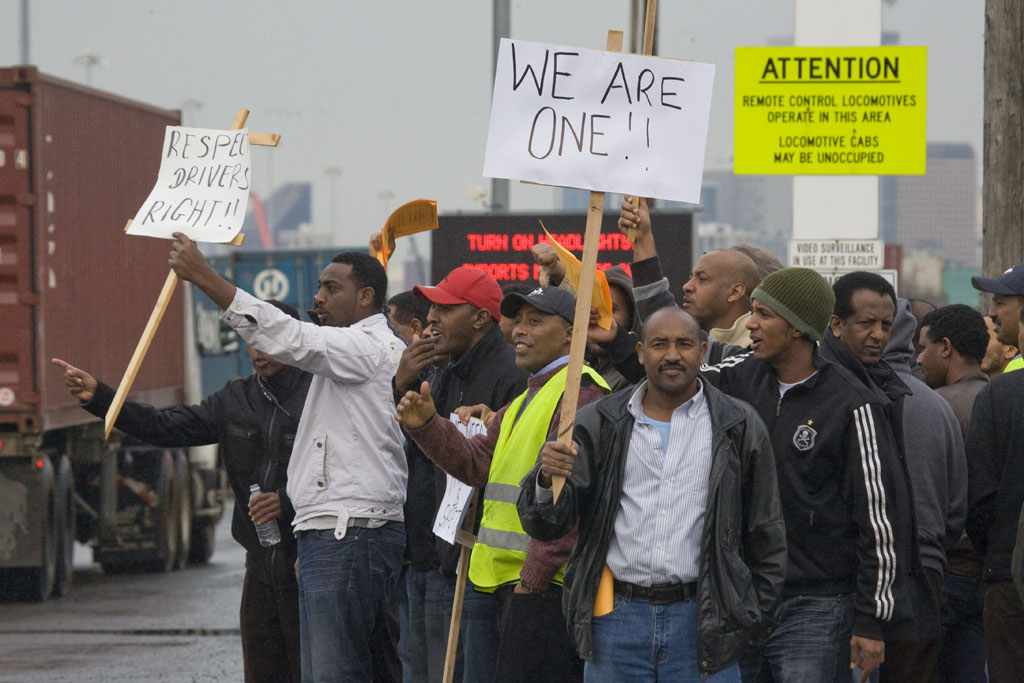
We’ve also heard from trucking companies who say they will comply with the regulations, and that they don’t need any financial assistance or Port action to do so. We applaud any trucking company that is willing to pay for new trucks and equipment upgrades required to comply with the regulations. But the truth is under the independent contractor system it is the drivers — not the trucking companies — who have to pay. And in these times of economic uncertainty and tight credit markets, asking truck drivers who earn poverty-level wages to come up with the money for truck replacements and retrofits is a recipe for disaster.
Two-and-a-half years are too long to wait for clean air. We are extremely disappointed by the Port of Oakland’s failure to act immediately to clean up Port truck diesel pollution that contributes to the public health crisis in our community. Epidemic incidences of asthma and high cancer risks are too high a price to pay for the Port’s intransigence. It’s up to the Port to put an end to it. It’s time for the Port to adopt a sustainable CTMP that makes the industry – not the drivers – pay for clean trucks.”