
FOR IMMEDIATE RELEASE: July 2, 2007
CONTACT: Favel Jens, 213-387-0780 ; Helen Sanchez, 323-887-0854
Environmental Justice Leaders, Green Groups Warn Ports: Polluted Air Here to Stay Without Stricter Clean Trucks Program
Environmental justice and other green organizations indicted the trucking industry’s efforts to sustain pollution-plagued ports in the San Pedro Bay, today warning Long Beach harbor officials that their proposal to reduce truck emissions as mandated by their own Clean Air Action Plan will fail if enacted as it is currently drafted.
“Trucking companies must be held accountable to clean up the air now,” said Adriano Martinez of the Natural Resources Defense Council.
The L.A. and Long Beach Ports are gearing up to put hundreds of millions of tax dollars toward new clean trucks. Nine key organizations that help make up the Green L.A. Port Working Group, a coalition of environmental justice, community, and public health organizations, told the harbor commissioners that a successful Clean Trucks Program must include:
- A real “clean truck” standard, which means the cleanest available individual truck, at the time of purchase – based on the truck’s toxic, criteria pollutant and greenhouse gas emissions. (The Program should not rely on “averaging” or allow other loopholes.)
- Explicit criteria to ensure 50% of trucks falling in the “frequent and semi-frequent” visit categories are replaced with clean alternative-fuel trucks as proposed in the Clean Air plan.
- Immediate employee status for truckers to ensure trucking companies, not individual drivers, are accountable for environmental and safety maintenance.
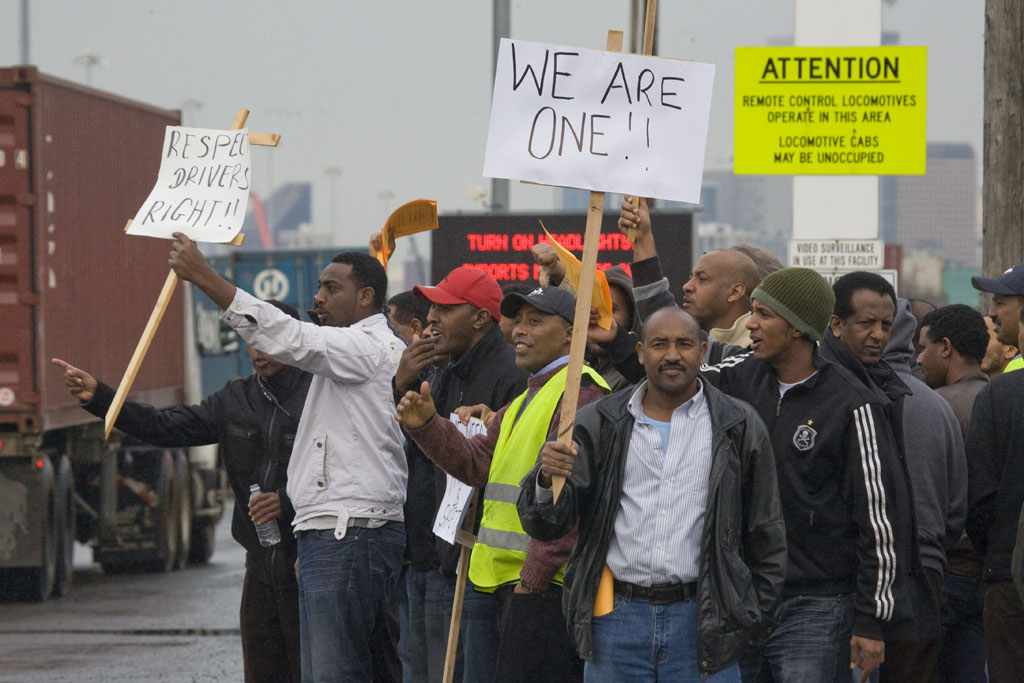
Representatives from the Green L.A. Port Working Group appeared at today’s Long Beach Harbor Commission meeting to deliver the message that stronger labor and environmental standards are needed to curb severe pollution in harbor communities. Additionally, environmental organizations asserted in two letters last week to Dr. Geraldine Knatz and Richard D. Steinke, Executive Directors of the Los Angeles and Long Beach Ports, that the trucking companies, not the current workforce of 16,000 individual drivers, should be immediately accountable to maintain the new, clean trucks.
The twin ports have held two forums on the proposal, at which hundreds of port drivers spoke, with the majority supporting an immediate transition to employees to solve the pollution crisis in the harbor. Overwhelmingly these drivers testified that they were unable to meet the current maintenance needs for the trucks, and they would be unable to afford or take care of newer clean trucks without a change in their economic status.
The trucking industry is aggressively lobbying to avoid responsibility for the cleaner, alternative-fueled trucks and technologies required to cut deadly pollution by 90 percent and more. Currently, the responsibility for buying and maintaining the trucks that move goods from the Ports to retailers like Target, Wal-Mart, and Home Depot rests on individual truck drivers, not the companies who contract them. Cleaning up the pollution from the trucks under the current system is untenable because after the drivers pay insurance, taxes, gas, and other basic operating expenses, they in effect become minimum wage workers unable to meet clean air compliance standards.
“It’s time for the trucking companies and their shipper clients to clean up their act,” said Angelo Logan, Director of East Yard Communities for Environmental Justice. “The responsibility for halting deadly pollution should fall on the industry, not the thousands of underpaid drivers who serve the ports.”
Added Rupal Patel, of Communities for Clean Ports: “The goods movement industry has profited while Southern California communities and taxpayers have paid the bill for its toxic air pollution. The Ports can change that – if they require the cleanest available trucks, and replace the current, broken trucking system with an immediate employee workforce. Otherwise, they’ll just have to subsidize the industry again.”
Today’s testimony by environmental justice leaders and the recent letters signal mounting support among major stakeholders within the Port system for a key provision to shift responsibility from individual drivers to the trucking companies and their Big-Box shipper clients.
The genesis of the trucks proposal was pressure from environmental and community groups concerned about the San Pedro Bay Ports to clean up the harmful pollution stemming from their operations. As a result, the Ports now are required to take dramatic steps to stop pollution prior to expanding to meet the trade demands of today’s global economy, projected to triple by 2020.
Diesel fumes resulting from dirty trucks have led to a high incidence of asthma, cancer, and other pollution-related diseases, disproportionately affecting children in area communities, including those of the port truck drivers.