
FOR IMMEDIATE RELEASE: February 15, 2008
CONTACT: Barb Maynard, 213-387-0780
Polluted Air Here to Stay with Long Beach Port Truck Scheme Public Relations Ploy Won’t Change the Deadly Status Quo
A Statement by Patricia Castellanos, Chair of the Coalition for Clean & Safe Ports
We are deeply disturbed that the Long Beach Port has rejected a comprehensive and sustainable solution supported by over 30 environmental, public health, community, clergy and labor organizations that will reduce diesel emissions by over 80 percent and fix our broken port trucking system — and instead intends to ram through a staff-devised scheme that will fail to permanently reduce severe port truck pollution.
In bowing to corporate pressure, Long Beach harbor commissioners are assuring that kids in Long Beach will continue to suffer from asthma and respiratory illness all so Kansans can get a cheaper television set.
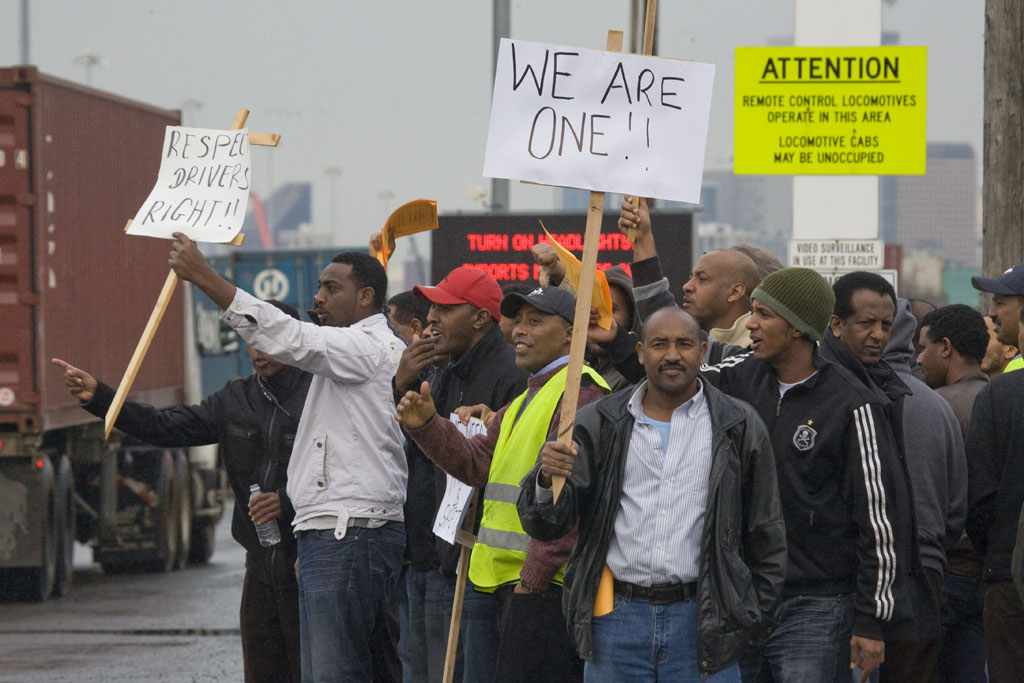
Doling out grants to immigrant truck drivers who take home on average $12 an hour would in effect make the Long Beach Port, and hence, taxpayers, the backers of the next generation of sub-prime loans. Long Beach’s piece-meal proposal provides no workable or enforceable mechanism to guarantee impoverished drivers will keep a new fleet of clean trucks on the road and able to move cargo without falling into old, dirty disrepair in a few short years – just like the current diesel-spewing trucks that sicken and kill Southern California children and residents each year. And while this port claims to support the CAAP policy that at least half the new fleet would be alternative-fueled trucks, the truth is that one provision alone - the 100% container-fee exemption for diesel trucks before the program start date - would simply replace the current diesel fleet with another diesel fleet.
Expanding subsidy and lease schemes like Gateway Cities absent of a transformed economic model will fail: Poverty-stricken drivers trapped in the status quo system have already participated in programs and are even more up to their eyeballs in debt than ever. As a result, “independent contractor” drivers like Oscar Tarelo and Saul Santamaria have testified to the news media and the harbor commission that their newer model trucks are getting older and dirtier because they cannot afford to maintain them properly.
Tarelo, a Long Beach resident, takes his newer model truck to the curbside mechanic who used to monkey with his old diesel rig, a poor substitute for the expensive but trained technician who knows how to tune the technology to keep the new engines clean. Santamaria is unable to pay down his hefty loan – his net average is $8.43 an hour, and the cost of fuel keeps rising. The proposed Long Beach scheme will actually increase truck expenses on drivers like Santamaria, burdening them with more debt, and lower their take-home pay.
This is not a sustainable scenario to replicate among some 16,000 other workers, should they choose to stay in an industry that puts the cost of clean air on their backs. Trucking companies must take responsibility for clean trucks by legitimately employing the workers who haul goods. Super-rich retailers like Wal-Mart, Target and Home Depot handsomely profit from shipping goods through our ports – they can afford to pay competitive rates so trucking firms can buy and properly maintain expensive green trucks.
Long Beach has signaled they will appease a largely unscrupulous industry with piece-meal policy, but it is no substitute for real reform. If the Port hopes to grow, they need to do so greenly. Clean air requires the moral courage and political will to implement a program that holds the industry accountable for reducing the pollution by taking permanent responsibility for the cleanest-available vehicles and their workers. Public relations driven by empty rhetoric won’t clean the air – we need action, and a strong Clean Trucks Program will get us there.